
How Better Facilities Data Helps Control Costs Across Your Estate
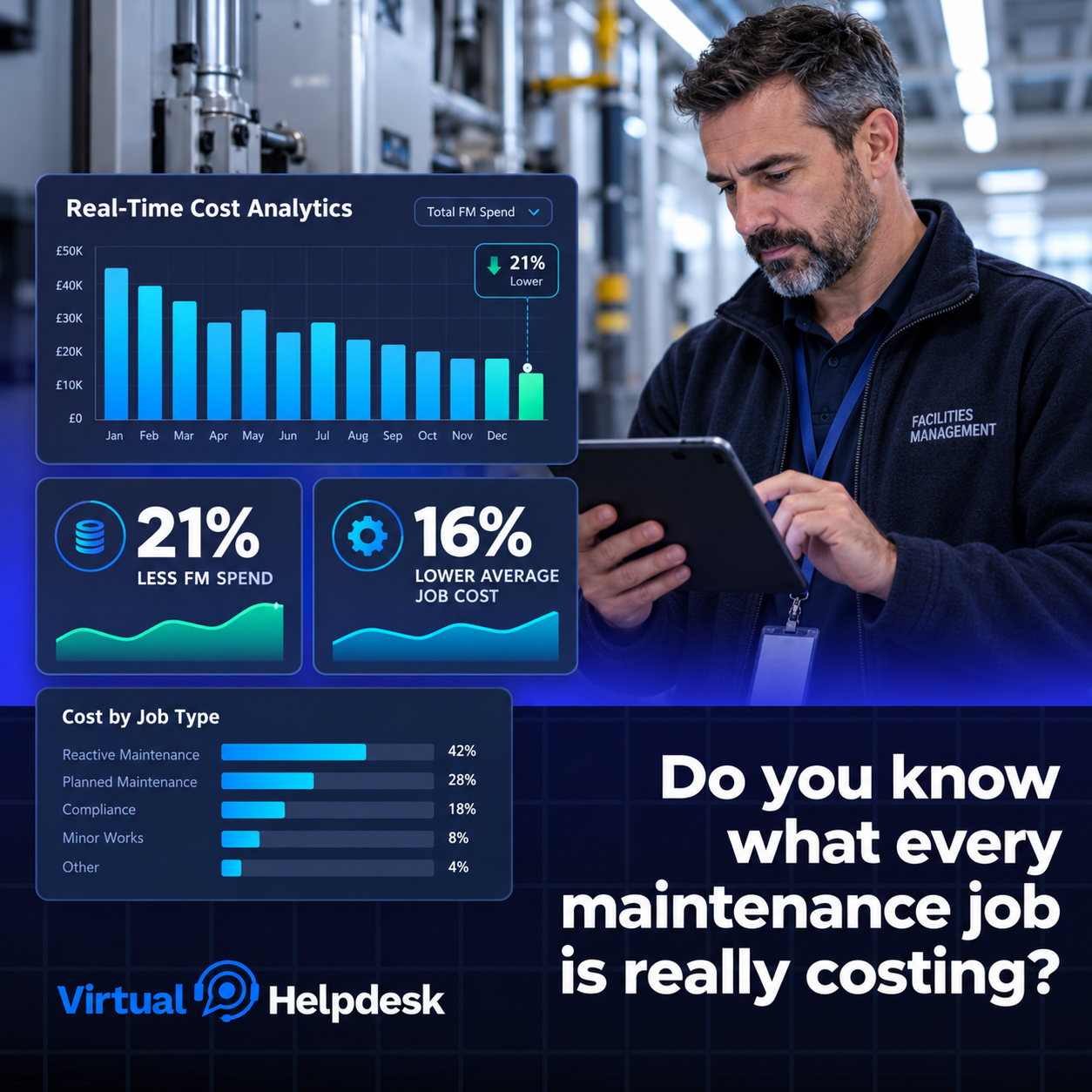
Facilities costs rarely rise because of one dramatic decision. More often, they increase through small gaps in visibility: repeat callouts, inconsistent contractor pricing, missed maintenance and limited insight into what each asset or site is costing. A modern CAFM platform gives facilities, finance and procurement teams the evidence they need to address those gaps.
The cost of limited visibility
Managing a complex estate involves thousands of decisions. Teams must decide which work is urgent, whether a quotation represents fair value, when an asset should be repaired and when replacement would make more financial sense. If job records, contractor information and maintenance schedules sit in separate spreadsheets, inboxes or systems, those decisions become harder to make consistently.
The immediate cost is administrative time. Facilities teams spend hours chasing updates, checking invoices and rebuilding reports. The wider cost can be more significant. Without reliable data, organisations may approve duplicate work, accept avoidable emergency callouts or continue investing in assets that repeatedly fail. Budget discussions then rely on estimates rather than a clear view of actual activity.
Start with the true cost of each job
Effective cost control begins with knowing what work costs at a useful level of detail. Virtual Helpdesk provides real-time reporting on cost per job, contractor performance and compliance by asset, site and discipline. This allows managers to move beyond a single total-spend figure and understand where the money is going.
For example, a team can compare the average cost of similar jobs across contractors, identify sites with unusually high reactive maintenance costs and examine whether repeat visits relate to the same asset. These patterns provide a stronger basis for challenging costs, reviewing service levels and directing attention to the areas with the greatest potential for improvement.
Use planned maintenance to reduce expensive surprises
Reactive work often carries a premium. Failures can require urgent attendance, disrupt services and create knock-on costs that extend well beyond the repair itself. A clear planned preventative maintenance schedule helps teams see what is due, what is overdue and what has been completed across the estate.
Virtual Helpdesk links PPM activity with buildings, assets and contractor workflows. Automated scheduling, status tracking and alerts help reduce the chance of essential work being missed. Over time, maintenance history also reveals which assets are reliable and which consume a disproportionate share of the budget. That evidence supports better decisions about repair, replacement and lifecycle planning.
Make contractor value easier to assess
The cheapest quotation does not always deliver the lowest overall cost. Response time, repeat visits, evidence quality and compliance all affect value. Virtual Helpdesk brings contractor records, approval status, performance information and costs into one system, helping teams compare outcomes as well as prices.
Centralised records also reduce the effort involved in checking insurance, accreditations and certifications. Approved contractors can be identified by discipline and location, while performance and spend remain visible. Procurement teams gain better information for tenders and negotiations, and facilities teams retain the flexibility to work with suitable local, regional or national suppliers.
Build budgets from evidence
Accurate forecasting depends on an accurate baseline. When job costs, PPM schedules and asset data are connected, finance teams can budget by site, asset or discipline and test assumptions against actual activity. Procurement can benchmark suppliers using consistent information, while estates leaders can explain where investment is needed and what risk may arise if work is deferred.
This visibility also strengthens accountability. Supporting evidence can be attached to work and costs, creating a traceable record from instruction through completion and payment. Instead of waiting for a month-end spreadsheet, decision-makers can use current dashboards to monitor spend and intervene earlier.
The same information improves conversations between departments. Facilities can explain the operational need behind a request, finance can see its budget impact and procurement can evaluate supplier performance against comparable work. Shared evidence reduces debate over whose figures are correct and keeps attention on the decision: where spending will protect service, compliance and long-term asset value.
From cost cutting to cost control
Good cost control does not mean reducing every maintenance budget. It means spending deliberately, preventing avoidable costs and understanding the return from each decision. In a recent large-estate implementation cited by Virtual Helpdesk, facilities management spend reduced by 21% and the average cost of a job reduced by 16%. Results will vary, but the example shows what can become possible when organisations improve visibility and control.
Virtual Helpdesk brings facilities, assets, contractors, compliance and maintenance activity together in one cloud-based CAFM platform. With implementation available in under 30 days, organisations can begin building a clearer picture of estate performance without a prolonged technology programme.
If your team wants to understand where facilities spend is going and make better-informed decisions about jobs, contractors and assets, book a Virtual Helpdesk demonstration at virtual-helpdesk.com.



Let’s Get Started
Smart Facility Management Starts Here
Take control of your facilities with Virtual Helpdesk’s innovative CAFM solution. From compliance to maintenance, we’ve got you covered.
Location
info@virtual-helpdesk.com
Franklins House, Wesley Lane, Bicester, OX26 6JU

Subscribe
Keep up to date with our latest product releases and news.